Is Invisible Nutrition Actually Effective for Kids?
August 1, 2026
Do Whole Food Powders Work for Picky Eaters?
August 5, 2026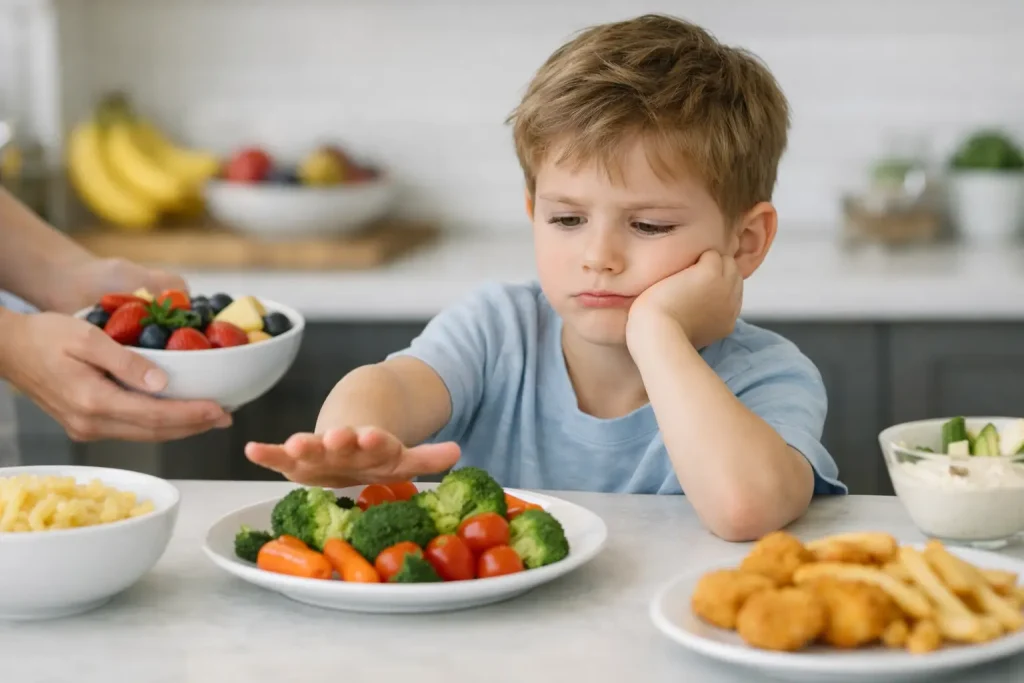
When your child will only eat a handful of foods, another plate of untouched vegetables is not the problem. The problem is the worry that follows: Are they getting what they need? Will this get worse? The best options for food aversions are the ones that protect your child’s sense of safety while giving your family a realistic path forward.
Food aversions are not a sign that you have failed at feeding your child. For many children, especially those with sensory sensitivities, ADHD, autism, anxiety, or ARFID-related feeding challenges, food can feel genuinely overwhelming. Smell, temperature, color, texture, and even the way foods touch can turn a meal into a high-stress event.
You do not need to win that event. You need a plan that lowers the pressure, preserves the foods your child can eat, and helps cover nutritional gaps without making every bite a battle.
Start by Protecting Safe Foods
A safe food is a food your child can reliably tolerate and eat without distress. It may be beige, packaged, repetitive, or nothing like the balanced meal you hoped to serve. It is still doing something valuable: keeping your child fed.
When food aversions are intense, removing favorite foods to encourage variety often backfires. A child who feels uncertain about what is being served may eat less, become more anxious at meals, or become even more attached to a shrinking list of accepted foods. Keeping at least one safe food available lets them arrive at the table without the fear of being trapped.
This does not mean you must serve only chicken nuggets or plain pasta forever. It means nutrition progress starts with safety, not surprise or pressure. Once a child is regulated and reliably fed, there is more room for curiosity over time.
Reduce Pressure, Not Expectations for Care
Traditional advice can make parents feel as if they need to persuade, bargain, or outlast their child. “Just one bite” may sound harmless, but for a child with a real aversion, it can turn meals into a test of endurance.
Instead, decide what you control and what your child controls. You can choose when meals and snacks are offered, what foods are available, and how calmly the table is managed. Your child can decide whether to eat and how much. That division may feel uncomfortable at first, especially when you are worried about nutrition, but it removes a great deal of conflict.
Try serving unfamiliar foods in tiny, no-pressure portions beside safe foods. Exposure can count even when a child does not eat the item. Looking at it, tolerating it on the table, touching it with a fork, or smelling it can all be meaningful steps. There is no prize for moving faster than your child can handle.
Keep New Foods Predictable
Predictability is often more helpful than enthusiasm. Serve a new food in the same spot on the plate. Avoid mixing it into a favorite meal when your child is working on trusting that food. Use familiar plates, familiar routines, and simple language.
A calm phrase such as, “You do not have to eat it. It can stay on your plate,” tells your child that the table is not a place where they have to defend themselves. That safety matters.
Work With Sensory Needs Instead of Against Them
Food aversions are frequently sensory. A child may like the flavor of a food but reject it because it is wet, crunchy, lumpy, warm, cold, or inconsistent from one bite to the next. They may tolerate a certain brand of yogurt but not another. This is not necessarily stubbornness. It is information.
Notice patterns before trying to solve them. Does your child prefer dry, crisp foods? Smooth foods? Foods separated on the plate? A very specific temperature? Their preferences can help you offer variations that feel manageable rather than random.
For example, a child who likes crunchy crackers may be more open to toasted bread than soft bread. A child who accepts smooth applesauce may eventually tolerate a very smooth fruit puree before they are ready for fresh fruit. The goal is not to disguise a challenge as a win. It is to build a bridge from what feels safe to what might feel possible.
It also helps to take the sensory load off the table. Strong cooking smells, noisy rooms, uncomfortable chairs, and rushed transitions can make eating harder. A quieter routine and a consistent place to sit will not erase an aversion, but they can make meals less demanding.
Use Quiet Nutrition Support for the Gaps
A food-first mindset is often framed as if every nutrient must come from a perfectly varied plate. For families living with severe picky eating, that expectation can create more shame than help. Food matters, but so does making sure your child has support while their food range is limited.
The practical question is not, “Can I make my child eat every food group today?” It is, “How can I reduce nutritional risk without adding another daily struggle?” For some families, that means working with a pediatrician or dietitian. For others, it includes a clean, child-friendly nutrition powder that blends into foods their child already accepts.
InviNutri was designed for this exact reality: whole-food nutrition that can be added to familiar foods without changing their taste or texture. It is not a replacement for feeding support, exposure work, or medical care when those are needed. It can be a daily nutrition safety net while you focus on calmer meals and a more sustainable relationship with food.
The right support depends on your child’s accepted foods, medical history, and sensitivities. If a child rejects most foods or has a history of reactions, weight concerns, or digestive symptoms, get individualized guidance before making major changes.
Build a Routine That Does Not Revolve Around Negotiation
Children with food aversions often do better when eating is predictable. Regular meals and snacks can reduce the all-day grazing that leaves them too full, or too dysregulated, to sit for a meal. A routine also helps parents stop feeling like every request for food requires a new negotiation.
Keep portions small at first. Large portions can look impossible to a child who is already wary. Let them ask for more. Serve water between meals when appropriate, and keep snack choices familiar enough that your child is not going long stretches without eating.
You can offer two accepted options alongside one low-pressure learning food, but avoid turning the meal into a custom restaurant order. The difference is subtle but important: you are creating a dependable structure, not demanding compliance or catering to every moment of discomfort.
Know When Food Aversions Need More Support
Some food aversions need specialized help, and asking for it is a strong parenting move. Speak with your child’s pediatrician if their food list is rapidly shrinking, they regularly gag or choke, eating causes pain or fear, they avoid entire textures or food groups, or you are concerned about growth, hydration, fatigue, or nutrient deficiencies.
An occupational therapist, speech-language pathologist, feeding therapist, registered dietitian, or clinician experienced with ARFID can help uncover what is driving the avoidance. The best fit depends on whether the primary issue is sensory discomfort, oral-motor difficulty, anxiety, medical symptoms, or a combination.
You do not need to wait until every meal feels impossible. Early support can protect both your child’s nutrition and their relationship with food.
Give Progress Room to Be Small
With food aversions, progress is rarely a straight line. A child may touch a new food one week and reject it the next. They may eat a food at school but not at home, or accept it only when it is prepared in one very specific way. That does not mean the effort is failing.
The best options for food aversions make room for those fluctuations. Keep safe foods available. Lower the pressure. Respect sensory boundaries. Add dependable nutrition support where it helps. And let your child learn, at their own pace, that meals can be a place of safety rather than a daily fight.
Your child does not need a perfect plate to be cared for well. They need a steady parent, a workable plan, and the reassurance that food can feel safe again.