Sensory Feeding Strategies That Lower Stress
May 31, 2026
ADHD Picky Eating Guide for Parents
June 4, 2026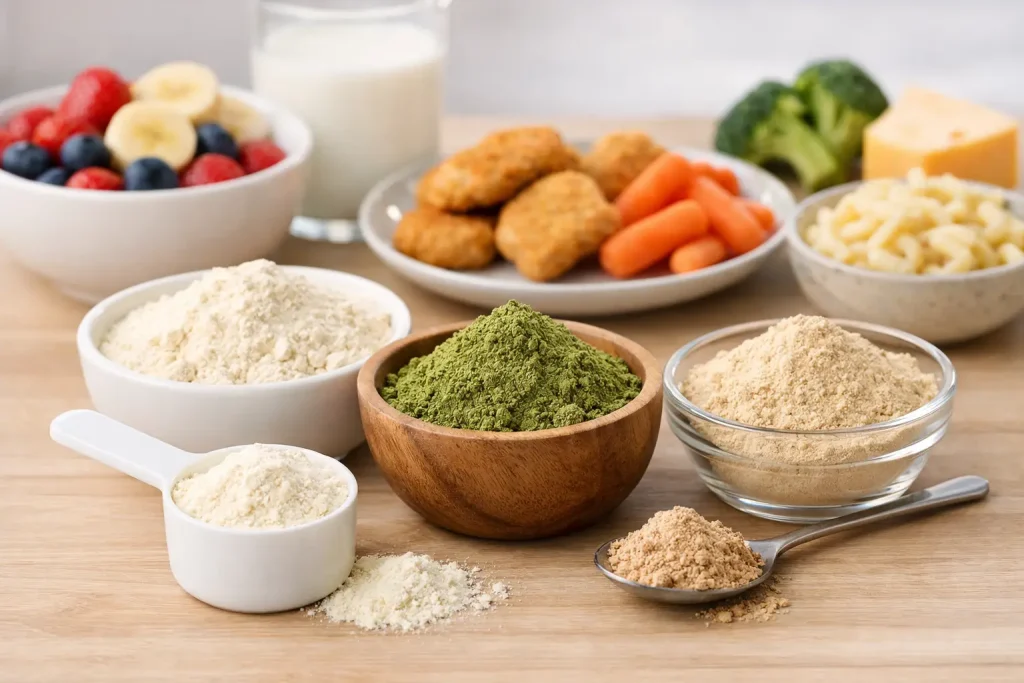
If you are searching for the best powders for selective eaters, you are probably not looking for a trendy wellness product. You are looking for relief. Relief from the mental math of wondering whether your child has eaten enough protein, enough iron, enough anything. Relief from the pressure of trying one more smoothie, one more chewable, one more meal strategy that sounds simple on paper and falls apart at your kitchen table.
That is what makes this category different. For families dealing with extreme picky eating, sensory sensitivities, or ARFID-related feeding challenges, the right powder is not about optimization. It is about lowering nutritional risk without raising stress.
What makes the best powders for selective eaters different
A powder can look great on a label and still fail completely in real life. Parents of selective eaters know this better than anyone. A product might promise fruits, vegetables, probiotics, protein, and a long list of vitamins, but if it changes the taste, smell, color, or texture of familiar foods, many kids will reject it instantly.
That is why the best powders for selective eaters have to clear a very different bar than powders made for adults or adventurous kids. They need to work inside a child’s sensory boundaries. That usually means mild or neutral flavor, smooth texture, and the ability to disappear into foods the child already accepts.
There is also an emotional piece that matters just as much. When a supplement turns into another feeding battle, it stops being helpful. Parents are not just choosing ingredients. They are choosing whether something will fit into a fragile daily rhythm without creating more refusal, suspicion, or conflict.
The main types of powders parents usually consider
Most powders for kids fall into a few broad groups. Some are greens powders dressed up for children. Some are protein powders. Some are multinutrient blends that try to cover a wider range of vitamins and minerals. Some lean heavily on sweeteners or flavor systems to make them more appealing.
Greens powders often sound promising because they suggest vegetable coverage, but they can be a poor match for highly selective eaters. They tend to have a distinct taste and smell, even when flavored. For a child with strong sensory awareness, that can be enough to make a safe food suddenly unsafe.
Protein powders can help in certain situations, especially if intake is low and a pediatrician has flagged growth or calorie concerns. But protein alone does not solve the broader issue many parents are worried about. A child living on crackers, yogurt, and one brand of nuggets may need wider nutrient support, not just extra grams of protein.
More comprehensive nutrition powders are often the most relevant option for selective eaters because they aim to fill gaps across multiple nutrients at once. Still, the formulation matters. Some are basically sweetened vitamin drinks in powder form. Others are closer to whole-food-based blends designed to be mixed into meals without calling attention to themselves.
What to look for in a powder your child may actually accept
The first thing to look at is sensory impact. This is where many products lose parents fast. If the serving size is large, the powder may be harder to hide. If the color is strong, it can alter familiar foods. If it has a chalky or gritty finish, kids who notice texture changes will often stop eating the food entirely.
Ingredient quality matters too, but not in a flashy way. Parents dealing with selective eating are often not looking for neon gummies, added sugar, artificial dyes, or synthetic-tasting formulas. They want something clean, simple, and gentle enough to use daily.
A practical powder should also fit into ordinary foods. Think oatmeal, yogurt, applesauce, pasta sauce, pancakes, or mac and cheese. If a product only works in smoothies, that limits its usefulness for families whose child already rejects mixed drinks, cold textures, or visible specks.
Finally, look for realistic positioning. Be cautious with any powder that acts like it can replace a balanced diet, fix picky eating, or transform a child’s relationship with food overnight. A better product understands its role. It is a safety net, not a miracle.
What to avoid when choosing powders for selective eaters
The biggest red flag is a formula built for marketing instead of real family use. That can show up as overflavored powders, oversized servings, or labels packed with trendy extras that make the product harder to tolerate.
Another issue is sweetness. Many children’s supplements rely on sweetness to improve compliance, but selective eaters do not all want sweet things. Some are especially sensitive to artificial or strong flavors. If every serving tastes like candy, that may work for some kids and completely backfire for others.
It is also worth being careful with powders that create pressure. If the product needs a big daily ritual, a special drink, or constant persuasion, it may not be sustainable. Parents of highly selective eaters need solutions that reduce friction, not add another task they have to negotiate every morning.
Why invisible nutrition matters more than impressive labels
Parents are often taught to focus on nutrition facts alone, but with selective eating, usability matters just as much. A powder only helps if it can be used consistently.
This is where invisible nutrition becomes so important. When a powder blends into accepted foods without changing the experience, it supports the child’s current safe eating patterns instead of disrupting them. That does not mean giving up on long-term feeding progress. It means respecting that nutrition support and feeding therapy are not the same thing.
For many families, especially those raising neurodivergent children, sensory safety is not a preference. It is the whole game. A child may be willing to eat buttered noodles every day and reject that same food if one tiny change is detected. In those households, invisibility is not a nice bonus. It is the reason a product can work at all.
How to compare the best powders for selective eaters
When comparing options, it helps to ask a few grounded questions instead of getting pulled into big promises. Does this powder disappear in foods my child already eats? Is the ingredient list aligned with what I am comfortable using every day? Will this make meals easier, or will it create more negotiations?
You can also think in terms of your actual goal. Some parents want broader nutrition coverage because their child eats fewer than ten foods. Others are trying to avoid sugary vitamins that have become a daily fight. Others need something that works for a child with ASD, ADHD, sensory processing differences, or a long history of food refusal.
The best choice depends on that context. A flavored shake powder might be fine for a child who happily drinks milk-based beverages. It is probably the wrong fit for a child who only accepts beige foods and notices every change. A whole-food powder with no obvious taste or texture may be much more useful in that case.
That is one reason products built around Child Nutrition Safety™ tend to resonate with overwhelmed parents. They acknowledge the real job to be done: covering nutritional gaps in a way that protects trust, lowers conflict, and fits the foods a child already considers safe.
A realistic way to introduce a powder
Even a well-designed powder should be introduced carefully. Start small. Use less than a full serving at first and mix it into a food your child accepts reliably. Choose a familiar meal when stress is low, not a rushed morning or a dinner that is already tense.
Watch for sensory changes before you worry about perfect dosing. If the food looks, smells, or feels different, adjust. Sometimes the right product still needs the right vehicle. A powder that disappears in applesauce may not work in yogurt. One that vanishes in pasta sauce may stand out in milk.
And if your child rejects it, that does not automatically mean you chose wrong or did something wrong. Sometimes the food pairing was off. Sometimes the serving was too much too fast. Sometimes your child is in a phase where any change feels unsafe. That is frustrating, but it is not a failure.
The powder that works is the one you can actually use
For selective eaters, the best powder is rarely the one with the loudest claims. It is the one that respects your child’s sensory world, supports the foods they already eat, and gives you a little more breathing room day after day.
That is why many parents end up moving away from flashy kids’ supplements and toward simpler, invisible options like InviNutri that are built to blend into real life. Not because they expect perfection, but because they need something sustainable.
If meals have become stressful, you do not need another product that asks your child to be less selective. You need support that works with the child you have right now, while giving you a steadier sense that they are covered.