Sugar Free Vitamins vs Gummies for Kids
June 16, 2026
Whole Food Vitamins vs Synthetic for Kids
June 20, 2026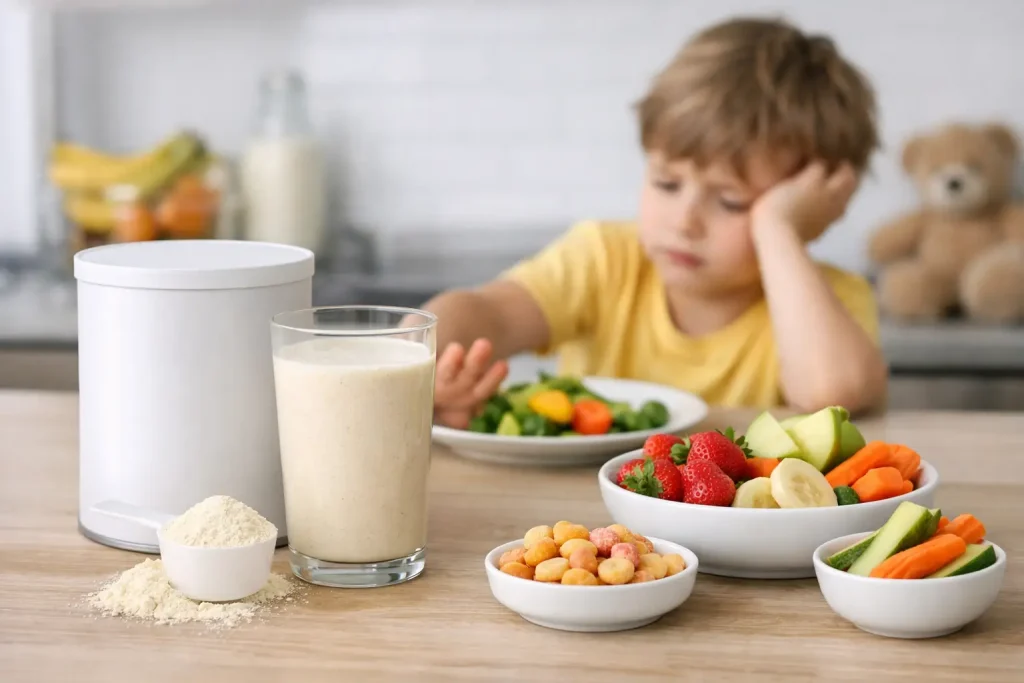
If your child can spot a single “healthy” speck in yogurt from across the room, a kids nutrition powder review needs to answer one question before anything else: will this actually work in real family life? Not in a perfect meal plan. Not with a child who happily eats salmon, spinach, and scrambled eggs. In the real world, where some kids eat five foods, reject anything new, and melt down when taste, texture, or color changes even a little.
That is where most nutrition products lose parents fast. The label may look impressive, but if the powder tastes sweet, turns food gritty, smells vitamin-like, or starts another mealtime argument, it is not support. It is just one more thing to fail.
What a kids nutrition powder review should look at first
For families dealing with extreme picky eating, sensory sensitivities, or ARFID-related feeding challenges, the usual review criteria are backward. Parents are often told to compare vitamin counts, trendy ingredients, or whether a product has a fun flavor. But for a child who notices everything, the first standard is much simpler: can it disappear into food they already accept?
That means taste matters. Texture matters. Color matters. Even smell matters. A powder can have every nutrient under the sun, but if it changes a safe food, many children will reject it immediately. For some families, that rejection is not mild resistance. It can mean panic, distrust, and a step backward in feeding progress.
The second thing that matters is whether the product respects the child instead of trying to overpower them. Many kids’ supplements are built around candy logic. They lean on sugar, sweeteners, bright colors, or flavor systems to make the product “kid-friendly.” For children with sensory differences, that can backfire. For parents trying to reduce daily friction, it can feel like swapping one problem for another.
The biggest differences between powders on the market
Most kids nutrition powders fall into a few categories. Some act like smoothie boosters and assume your child already drinks blended fruit or milk-based shakes. Some are basically multivitamins in powder form, often with a strong taste that needs masking. Others are meal replacement style products, which can be useful in some cases but may feel too heavy, too sweet, or too obvious for selective eaters.
A smaller category is built around invisibility. That distinction matters more than many reviews admit. If a product is meant to blend into foods your child already eats without changing the experience of eating them, it is solving a very different problem. It is not asking your child to cooperate with a supplement routine. It is working around the barriers that make supplement routines fail.
For overwhelmed parents, that difference is not cosmetic. It is the difference between a product that sounds good in theory and one that can realistically become part of a daily rhythm.
Ingredient quality is only helpful if the child will consume it
Clean ingredients matter. Many parents are actively trying to avoid synthetic dyes, added sugar, artificial flavors, and heavily processed formulas. That is a reasonable filter. But ingredient quality cannot be separated from compliance in the real sense of the word, not forced compliance, but actual consistent use.
If your child refuses the product after one serving, the label does not help you much. The best option is usually the one that balances whole-food nutrition, sensible formulation, and a delivery method your child will tolerate day after day.
That is also why parents should be cautious around overly dramatic promises. A nutrition powder is not going to fix feeding challenges by itself. It is not a cure for picky eating. It is not a replacement for medical care when deficiencies or growth concerns are on the table. But it can absolutely serve as a nutrition safety net when food variety is limited and progress is slow.
Kids nutrition powder review: what parents should ask before buying
A useful kids nutrition powder review should help you screen for fit, not just hype. Start with the child, not the marketing.
Ask where the powder is supposed to go. Can it blend into common safe foods like yogurt, applesauce, oatmeal, mashed potatoes, pasta sauce, or baked items? Or does it really only work in shakes and smoothies? If your child does not reliably drink those, that is a red flag.
Ask how detectable it is. “Mild taste” is not the same as no taste. “Smooth blend” is not the same as no texture change. Parents of sensory-sensitive kids know those differences matter.
Ask how often you can realistically use it. If preparation is complicated or requires a separate routine, consistency usually drops. The best products tend to fit into food you are already serving, because exhausted parents do not need another elaborate wellness task.
Ask whether the formulation supports daily use without loading your child with sugar, dyes, or ingredients you would rather avoid. A powder meant to reduce worry should not create a new set of concerns.
Who tends to benefit most
These products are often most helpful for children with highly repetitive diets, limited accepted textures, or resistance to standard vitamins and gummies. They can also be a relief for families trying to lower mealtime pressure. When every bite has become emotionally charged, having a low-conflict way to add nutritional support can change the emotional tone of the whole day.
This is especially true in homes where neurodivergence shapes feeding. Children with ASD, ADHD, sensory processing differences, or strong anxiety around food may not respond to conventional advice like “just keep offering variety.” Exposure can still matter, but parents often need support now, not only after months of therapeutic feeding work.
What makes one powder stand out from another
The strongest products in this category tend to understand that parent stress is part of the problem being solved. A good formula should not just provide nutrients. It should reduce friction.
That usually means the powder is neutral enough to disappear, simple enough to use daily, and clean enough that parents feel comfortable using it consistently. It also means the company speaks to real-life feeding struggles without blaming families or pretending that enough effort can make every child eat a rainbow.
In that respect, a brand like InviNutri stands out because it frames the goal clearly. This is not about turning your child into an adventurous eater overnight. It is about Child Nutrition Safety™ – lowering nutritional risk, protecting sensory trust, and giving parents a practical fallback when food variety is not there yet.
That positioning matters because it is honest. Parents of selective eaters are not looking for fantasy. They are looking for something sustainable.
Trade-offs to keep in mind
No product is perfect for every child. Some children tolerate powders easily in one food but not another. Some families want a more comprehensive supplement, while others want the simplest possible ingredient profile. Some kids do better with a truly invisible option, while others can handle a flavored drink if they already like smoothies.
Price can also be part of the equation. A cleaner, more specialized formula may cost more than mainstream children’s supplements. For some families, that higher cost is worth it if the product is actually used instead of wasted. For others, budget is a major factor, and the right answer is the most practical option they can sustain.
There is also the question of expectations. A powder can help cover nutritional gaps, but it should not become a source of pressure or secrecy that damages trust. Parents know their child best. If a child is highly vigilant about food changes, it may take careful trial and error to find safe uses that do not trigger rejection.
How to judge if a powder is working
The clearest sign is not usually dramatic. It is consistency.
If you can use the product regularly without food refusal increasing, that is meaningful. If your child continues eating familiar foods without noticing a difference, that is meaningful. If you feel less panicked about every missed vegetable, every beige dinner, every week of the same five foods, that is meaningful too.
Some parents also notice indirect benefits. Meals feel calmer. They stop negotiating over bites quite so hard. The emotional temperature around food drops because the stakes feel a little less terrifying. That kind of relief matters. It gives families room to support feeding progress without carrying the full weight of nutrition fear at every meal.
A good review should say this plainly: the best kids nutrition powder is not the one with the most impressive marketing. It is the one your child will reliably accept, your family can afford to keep using, and you can trust as part of a bigger support system.
If feeding has felt heavy for a long time, that does not mean you are doing it wrong. Sometimes the most helpful solution is not louder nutrition advice. It is a quieter kind of support that fits your child as they are right now.