Gummies vs Hidden Nutrition for Picky Eaters
September 12, 2026
Food First Nutrition vs Supplements for Kids
September 16, 2026
When your child eats the same three foods on repeat, a vitamin aisle full of bright gummies can feel less like help and more like another impossible decision. The best no sugar multivitamins for picky kids are not necessarily the ones with the loudest labels or the longest ingredient lists. They are the options your child can realistically take, consistently, without adding more pressure to meals.
That distinction matters. For families managing sensory sensitivities, extreme picky eating, ADHD, autism, or ARFID-related feeding challenges, nutrition is rarely as simple as offering another bite of broccoli. You may already be doing everything you can to protect your child’s safe foods and keep the peace at the table. A no-sugar multivitamin can be a practical layer of support, but only if it fits your child instead of becoming one more daily battle.
What “No Sugar” Should Actually Mean
A no-sugar multivitamin should contain no added sugar, but that phrase is only the beginning. Some children’s vitamins avoid cane sugar while relying on syrups, sweeteners, sugar alcohols, or intensely flavored ingredients that can still be difficult for sensitive children to tolerate.
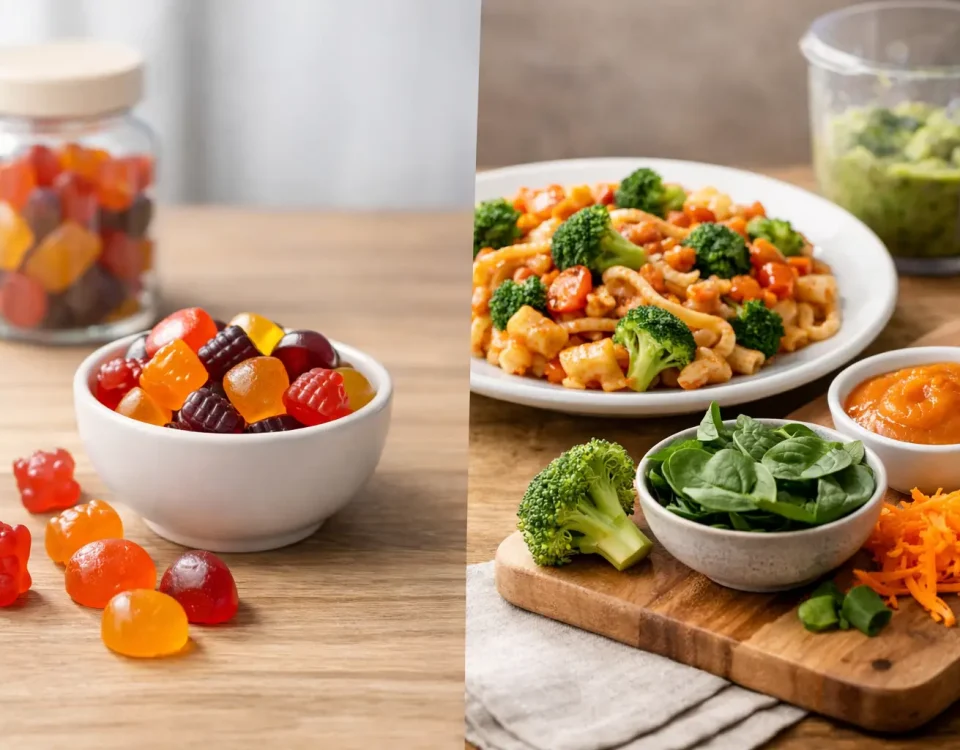
For many parents, the goal is not simply to reduce sugar. It is to avoid teaching a child that vitamins must taste like candy to be acceptable. Gummy vitamins are convenient, but they can blur that line, increase dental concerns, and create a daily negotiation when a child asks for more.
Read the full label, not just the front of the bottle. Look for added sugars, artificial colors, artificial flavors, and sweeteners your child may react to or dislike. A clean label does not need to be complicated. It should make it easy to understand what you are giving your child and why.
How to Choose the Best No Sugar Multivitamins
The right multivitamin depends on your child’s age, diet, medical history, and sensory needs. No product can replace individualized guidance when a child has known deficiencies, poor growth, a very limited diet, or feeding challenges that affect daily life. Your pediatrician, registered dietitian, or feeding specialist can help determine whether your child needs targeted testing or specific nutrients beyond a general multivitamin.
Still, there are a few practical standards that can make the choice much clearer.
Start with the nutrients most likely to matter
A broad children’s multivitamin often includes vitamins A, C, D, E, and several B vitamins, along with minerals such as zinc and iodine. Vitamin D can be especially relevant for children who have limited sun exposure or do not regularly consume fortified dairy or alternatives. Iron deserves more care: it is important for some children, but not every child needs an iron-containing multivitamin, and too much can be harmful.
The goal is not to chase the highest possible percentages on a label. More is not automatically better. Look for age-appropriate amounts and ask your child’s clinician about nutrients that are particularly relevant to their diet. A child who avoids animal foods, dairy, vegetables, or fortified grains may have different needs than a child with a wider but inconsistent diet.
Consider the form before the formula
A perfectly formulated vitamin is not useful if your child refuses it after one smell or one sip. This is where mainstream advice often misses the reality of selective eating.
Chewables may work for some kids but feel chalky or overly sweet to others. Liquids can be easier for a child who cannot chew a tablet, yet their flavor and smell may be a dealbreaker. Capsules are generally unrealistic for younger children. Powders can be a gentle option when they truly disappear into a familiar food or drink without changing its taste, texture, or color.
For sensory-sensitive children, “just try it” is not a neutral request. A change in texture can make a safe food feel unsafe. Choose a format that protects the foods your child already accepts.
Watch for ingredient clutter
Many children’s supplements add colors, flavors, fillers, and sweeteners to make the product more marketable. That does not mean every added ingredient is dangerous. It does mean parents deserve a choice that is not built around a candy-like experience.
If your family prefers whole-food ingredients, no dyes, no synthetic flavors, and no added sugar, use that preference as a filter. Be realistic, too: whole-food-based products can vary in nutrient amounts and may not provide every nutrient found in a conventional multivitamin. The best fit is the one that aligns with your child’s needs and your family’s priorities, not the one that promises to do everything.
Check the age range and dosing instructions
Children are not small adults. A supplement designed for teens may provide amounts that are not appropriate for a preschooler, while a toddler product may not meet the needs of an older child. Follow the serving instructions carefully, and store all supplements out of reach. Even no-sugar products can pose a risk if children take more than directed.
Why Gummies Are Not Always the Easy Answer
Gummies solve one problem: many children will take them willingly. But for parents trying to move away from sugary treats and artificial ingredients, they can introduce new concerns.
First, gummies often contain sweeteners or flavor systems designed to make them feel like candy. Second, they may not include certain nutrients in meaningful amounts because some ingredients are difficult to stabilize in gummy form. Third, a child who already has a strong preference for sweet foods may begin to view the vitamin as another treat rather than a health routine.
None of this means gummies are always wrong. If a gummy is the only form your child will tolerate and it is recommended for their needs, consistency has value. But if gummies create arguments, encourage sneaking, or do not match your ingredient standards, you are allowed to choose another path.
A Calmer Way to Introduce a Multivitamin
A new vitamin does not need a big presentation. In fact, for many selective eaters, less attention is better. If you are using a tasteless powder intended to blend into food, begin with a small amount in a reliably accepted food and follow the product directions. Avoid adding it to the only serving of a precious safe food until you know your child will accept it.
Keep the routine predictable. The same food, the same time of day, and the same low-pressure approach can reduce uncertainty. You do not need to persuade, praise excessively, or turn nutrition into a test of cooperation. The aim is simply to create a sustainable rhythm.
If your child notices a change and refuses the food, that is useful information, not a failure. Return to the familiar version of the food, protect trust, and reconsider the form or routine. Feeding progress is rarely linear, especially when sensory needs are involved.
When a Nutrition Safety Net Makes Sense
A no-sugar multivitamin can be especially reassuring during seasons when variety is low: a food jag that lasts weeks, illness, school transitions, travel, or periods when your child’s accepted foods shrink. It can also help parents step back from the exhausting mental math of every meal.
That is the heart of Child Nutrition Safety™: not pretending that a supplement makes every meal perfect, but reducing some of the nutritional risk while you support your child with patience. InviNutri was created for families who need that kind of support without changing the taste or texture of the foods their children trust.
A multivitamin is not a substitute for medical care, feeding therapy, or adequate calories when those are concerns. But it can be a useful bridge – one that gives your family breathing room while you work with the reality in front of you.
The Best Choice Is the One Your Child Can Live With
The best no sugar multivitamin is not necessarily the most expensive, the most popular, or the one with the most nutrients listed in tiny print. It is age-appropriate, thoughtfully formulated, easy to use, and compatible with your child’s sensory boundaries.
If your child’s diet is highly restricted, bring the label and a clear list of accepted foods to their next pediatric appointment. That conversation can turn broad worry into a more specific plan. And in the meantime, remember this: choosing a practical nutrition safety net is not giving up on family meals or healthy eating. It is caring for your child in the way they can receive care right now.