How to Use Safe Foods Strategically at Home
August 15, 2026
A Guide to Daily Nutrition Coverage for Kids
August 19, 2026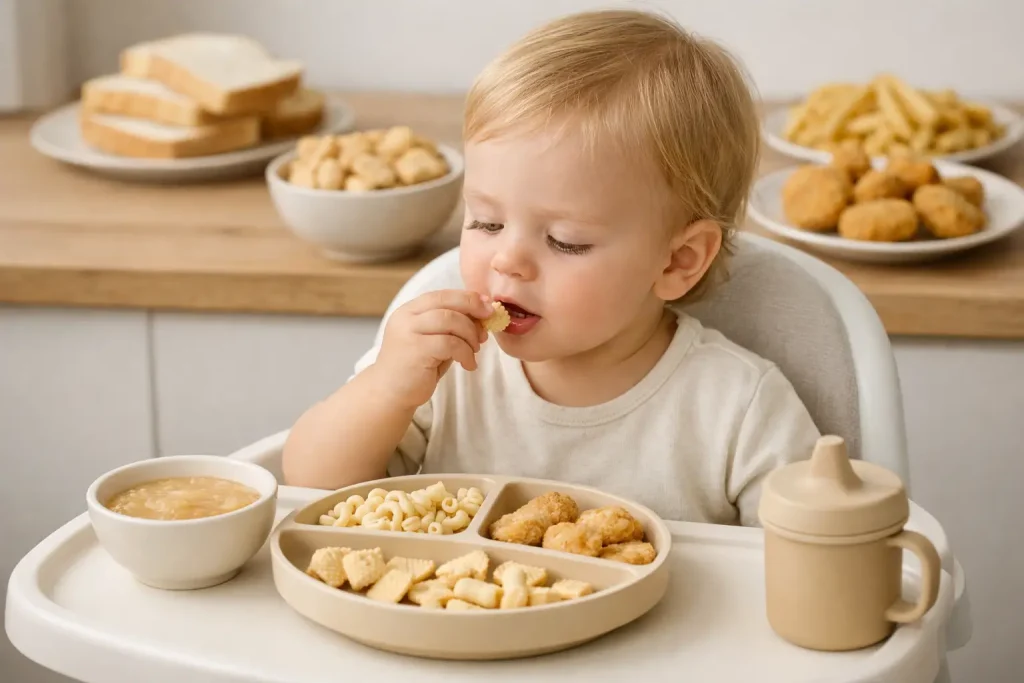
If your toddler’s plate is mostly crackers, toast, pasta, waffles, nuggets, and fries, you are not imagining the sameness. And if you are asking, “can toddlers live on beige foods,” you are probably carrying more worry than anyone sees at the table. You may have tried offering vegetables, cutting food into fun shapes, sitting through standoffs, and hearing advice that makes it sound as if your child’s eating is a simple behavior problem.
It is not that simple. Beige foods are often predictable in color, flavor, smell, and texture. For many toddlers, especially those with sensory sensitivities, neurodivergence, or feeding challenges, predictability feels safe. The goal is not to shame the safe foods or force a colorful plate overnight. It is to understand where nutrition risks can build and create a calmer, realistic plan.
Can Toddlers Live on Beige Foods Alone?
Toddlers can get enough calories from a beige-food diet for a while, and many beige foods do provide useful nutrition. Bread and cereal may be fortified with B vitamins and iron. Yogurt, cheese, chicken nuggets, and milk can contribute protein, fat, calcium, and vitamin D. Potatoes and pasta are not nutritionally empty.
But living on a narrow group of beige foods long term is different from simply going through a picky phase. When a child regularly accepts only a few foods, they may miss nutrients that are less likely to show up in their usual rotation. Fiber, iron, zinc, vitamin C, healthy fats, and a range of vitamins can become harder to get. Constipation, low energy, frequent illness, poor growth, dental concerns, or pale skin can sometimes be clues worth discussing with a pediatrician.
This does not mean every toddler who eats plain pasta is deficient. Nutrition is cumulative, and the details matter. A child who eats oatmeal, eggs, yogurt, fortified cereal, chicken, and potatoes has a different nutrition picture than a child who accepts only a handful of snack foods. Frequency, portion size, growth, supplements, medical history, and accepted drinks all matter too.
The more useful question is not, “Is beige food bad?” It is, “Is my child getting enough variety and foundational nutrition across the week to support growth?”
Why Beige Foods Feel So Safe
Toddlers are wired to be cautious around new foods. That is developmentally normal. But some children experience food far more intensely than others. A strawberry is not just red. It may be wet, seedy, cold, fragrant, and unpredictably soft. A mixed meal can feel like an impossible sensory puzzle.
Beige foods tend to offer consistency. The cracker snaps the same way. The noodle feels familiar. The toast is dry and predictable. For a child with sensory sensitivities, anxiety around food, ADHD, autism, or ARFID-related feeding challenges, those qualities can be the difference between eating and not eating.
That is why pressure often backfires. Requiring a bite, hiding a new food in a trusted meal without a plan, or turning dinner into a negotiation can make safe foods feel less safe. Children who already feel overwhelmed at meals may narrow their diet further when they sense tension.
You are not “giving in” by serving a familiar food. You are helping your child arrive at the table regulated enough to eat. The opportunity is to protect that safety while quietly strengthening the nutrition around it.
Start With the Foods Your Child Already Accepts
A lower-conflict nutrition plan starts with reality. Write down what your child reliably eats and drinks over several days, including brands, sauces, and preparation styles. Parents are often surprised to see that a diet that feels completely beige still has a few useful anchors: fortified cereal, milk, yogurt, eggs, peanut butter, potatoes, or a specific chicken product.
Then look for gentle ways to build around those anchors. If your child accepts toast, a familiar spread may be more achievable than a new side dish. If they eat plain noodles, serving a tiny amount of sauce separately is less threatening than coating every noodle. If yogurt is safe, trying a slightly different flavor on a separate plate may be enough exposure for one day.
Progress may look almost invisible at first. Your child might tolerate a food on the table, touch it with a fork, lick it, or accept it near their safe food. Those are meaningful steps. Eating is not the only sign that a child is learning.
Avoid changing every part of a meal at once. Keep at least one food your child can confidently eat, and let new foods remain optional. That approach protects calories and trust while giving curiosity room to grow.
Fill Gaps Without Making Meals Harder
When food variety is limited, parents need options that do not require a daily battle. A pediatrician or registered dietitian can help identify specific concerns based on your child’s growth, eating pattern, and medical needs. If a child has a very restricted diet, poor weight gain, frequent gagging, pain with eating, or growing fear around meals, ask for feeding support sooner rather than later.
For many families, a nutrition safety net can also be practical. The right choice should fit your child’s sensory needs and your family’s values. Some children reject chewy gummies, strongly flavored drinks, or anything that changes the color or texture of a safe food. That is not stubbornness. It is useful information about what will actually work.
An invisible, whole-food nutrition powder such as InviNutri can be one option for families who need daily foundational support without asking a child to accept a new taste or texture. It is designed to blend into foods children already trust, giving parents a way to reduce nutritional risk while they continue supporting food expansion at a manageable pace. It is not a replacement for meals, medical care, or feeding therapy when those are needed. It is a practical bridge for the gap between what children need and what they can comfortably eat right now.
When Beige Eating Needs More Support
Many toddlers go through selective phases and gradually broaden their diets. Still, some patterns deserve more attention. Reach out to your child’s pediatrician if eating has become increasingly restricted, your child is dropping foods they once ate, growth has slowed, or meals regularly involve gagging, coughing, distress, or refusal so intense that family life revolves around it.
It is also worth asking for support if your child eats fewer than about 20 foods, refuses entire texture groups, only accepts foods prepared in one exact way, or seems afraid of trying food. These patterns do not automatically mean ARFID or another diagnosis. They do mean your family deserves help beyond “they’ll eat when they’re hungry.”
A pediatrician may review growth and lab work, rule out medical issues, and refer you to a pediatric dietitian, occupational therapist, speech-language pathologist, or feeding specialist. The best support is responsive, not forceful. It respects the child’s sensory experience while making room for nourishment and gradual change.
Let Mealtime Be a Safe Place Again
A beige-food phase can make parents feel like every meal is a test they are failing. It is not. Your child is communicating what feels manageable, and you are doing the hard work of listening while holding their health in mind.
Offer safe foods. Keep exposure gentle. Watch the bigger nutrition picture rather than judging one dinner. And when the gap between what your toddler eats and what they need feels too wide, seek support that lowers conflict instead of adding more. A calm, nourished child does not need a perfect plate to take the next small step.