
Food First Versus Backup Nutrition for Kids
September 8, 2026
Gummies vs Hidden Nutrition for Picky Eaters
September 12, 2026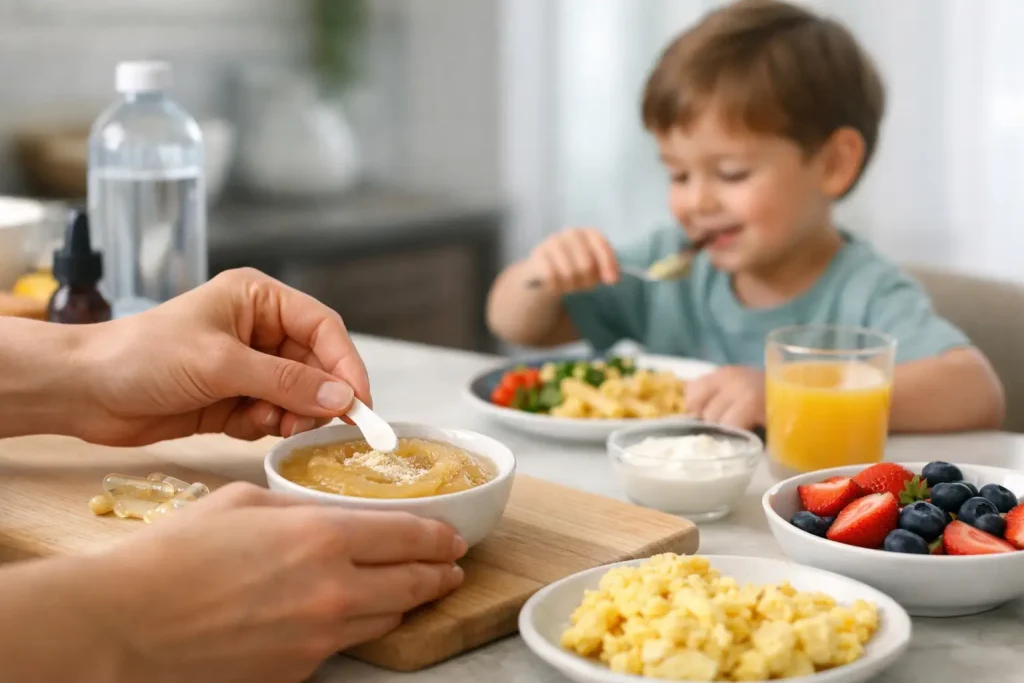
When your child has eaten the same three foods for weeks, another lecture about balanced plates is not helpful. You are not failing because broccoli keeps coming back untouched. For many families, mixing vitamins into food is a practical way to reduce nutritional worry without turning every bite into a negotiation.
That does not mean tricking your child, overriding their sensory needs, or expecting one powder to fix a restricted diet. It means working with the foods, textures, and routines that already feel safe – while creating a little more nutritional breathing room for everyone.
Why mixing vitamins into food can feel like a relief
Picky eating is often treated as a phase that parents should simply outwait or push through. But if your child has strong sensory sensitivities, a very limited accepted-food list, ADHD, autism, anxiety around new foods, or ARFID-related feeding challenges, the stakes can feel much higher. You may be carrying a quiet, constant question: Are they getting what they need?
Traditional supplements can add another hard moment to the day. Gummies may be too sweet, chewy vitamins can have an aftertaste, and liquids can change the flavor of a familiar drink. Even a well-intended “just one bite” can make a child more suspicious of food they once accepted.
A carefully chosen nutrition powder can be different because it meets your child where they are. The goal is not to make safe foods less safe. The goal is to support those foods quietly, so breakfast, lunch, or a bedtime snack can stay predictable.
For exhausted parents, that predictability matters. Less pressure at the table often protects something just as valuable as nutrition: trust.
Start with foods your child already accepts
The best food to mix a vitamin into is usually not the food that looks healthiest. It is the food your child reliably eats. This can feel counterintuitive when you are desperate to expand their diet, but safe foods are the foundation that makes daily nutrition support possible.
Think about foods with enough moisture or thickness to hold a fine powder without becoming gritty. Yogurt, applesauce, oatmeal, smoothies, pancake batter, mashed potatoes, pasta sauce, soups, and certain baked goods can work well. For some children, a small amount stirred into a familiar dip or pudding is easier than mixing it into a full serving.
Start with a portion you know will be finished. Adding nutrition powder to an entire bowl of oatmeal is not useful if your child eats two bites and walks away. A few spoonfuls of a favorite yogurt, offered alongside the rest of the meal, can be a more dependable choice.
Texture matters as much as taste. If your child notices tiny changes, blend or whisk the powder thoroughly. Let wet foods sit for a minute if needed, then stir again. With a sensitive eater, even a small clump can be enough to lose a trusted food.
Choose the right temperature
Always follow the directions on the specific product. Some nutrients may be less stable with prolonged high heat, while other powders are designed for cooking or baking. When you are unsure, mixing into cool or room-temperature food is often the simplest approach.
This is also where a whole-food nutrition powder may fit more naturally into family meals than a strongly flavored supplement. InviNutri, for example, is made to disappear into foods children already accept without added sugar, dyes, or a noticeable change in taste or texture.
What to look for before you mix
Not every vitamin product belongs in every meal. A supplement that works beautifully for one child can be a poor fit for another, especially when sensory sensitivity is part of the picture.
Look past the front-label promises. Consider whether the product has added sugar, artificial colors, strong flavoring, or a chalky texture that could make a safe food feel different. Check serving instructions, age guidance, and whether it is intended to be mixed into food. More is not automatically better, especially with nutrients that can build up in the body.
It also helps to know what you are trying to support. A child who eats few fruits and vegetables may need a different conversation than a child who avoids most protein foods or has a medically diagnosed deficiency. If your child has an underlying condition, takes medication, has food allergies, has growth concerns, or follows a highly restricted diet, bring your pediatrician or a pediatric dietitian into the decision. Supplements can support a diet, but they are not a substitute for individualized medical care.
Mixing vitamins into food without breaking trust
Parents deserve a judgment-free answer here: privacy around nutrition support and secrecy are not always the same thing.
Young children do not need a detailed ingredient briefing for every spoonful of applesauce. You are allowed to prepare food and serve it normally. At the same time, repeatedly adding something your child strongly objects to, especially after they have noticed a change, can create more anxiety around eating.
The line is your child’s sense of safety. If they ask what is in their food, answer simply and calmly in an age-appropriate way. If they reject a food after a change, do not force it. Return to an accepted version, then try a different food vehicle another day.
For older children and children who need more predictability, collaboration may work better. You might say, “We’re adding a nutrition powder to your smoothie to help your body get some of what it needs. Would you rather have it in the chocolate smoothie or the vanilla yogurt?” Giving a small, real choice can lower resistance without making nutrition a debate.
A gentle routine works better than a perfect plan
Trying to cover every possible nutritional gap at every meal can quickly become another source of stress. Instead, choose one low-pressure moment that is already consistent. Maybe it is the breakfast your child eats before school, an after-school smoothie, or the snack they request every evening.
Consistency matters more than creativity. Once you find a food and amount that work, keep it boring in the best possible way. Your child does not need a new recipe every day. They need familiar food, served without a big emotional charge.
If you are introducing a new powder, make the first few tries small and quiet. Do not announce it as a test. Avoid pairing it with a day when your child is sick, overtired, or already struggling with a new food. If the food is rejected, that is information, not a disaster. Try a different texture, a smaller portion, or another safe food later.
What a nutrition safety net can and cannot do
Mixing vitamins into food can help fill some gaps when real-life eating is narrow. It can offer reassurance during seasons when your child’s diet is especially repetitive. It may also help you stop treating every meal as a referendum on your parenting.
But it cannot replace eating skills, feeding therapy when it is needed, adequate calories, hydration, or medical support for a child with significant restriction. It should not be used to disguise medication unless a pharmacist or prescribing clinician has told you that is safe. And it should never become a reason to pressure a child to eat foods that overwhelm them.
The healthiest long-term approach often holds two truths at once: your child deserves nutrition support now, and they deserve patient, respectful opportunities to build comfort with food over time. Those goals do not compete.
Some days, progress looks like a new bite. Other days, it looks like a familiar meal eaten calmly, with a little extra nutrition mixed in and no tears at the table. That kind of peace is not settling. For many families, it is the steady ground from which feeding can finally feel safe again.